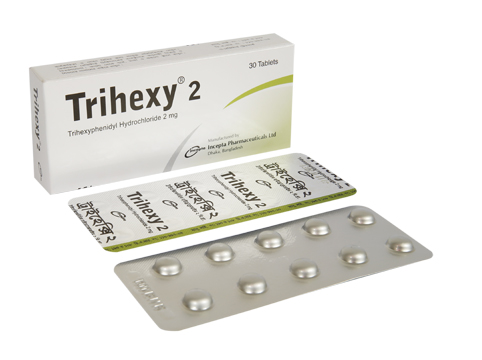
Trihexy 2 mg (Trihexyphenidyl Hydrochloride): Complete Guide to Uses, Dosage, Benefits, Side Effects & FAQs
Introduction to Trihexy 2 mg
Trihexy 2 mg is a specialized prescription medicine used primarily to treat the symptoms of Parkinson’s disease and extrapyramidal reactions caused by certain drugs. Categorized under the Neurology & Psychiatry Medicines, Generic Medicines, and Prescription Medicines categories, it is a vital tool in restorative neurology. Instead of increasing dopamine directly, Trihexy 2 mg works by balancing the chemical messengers in the brain to restore motor control.
Think of Trihexy 2 mg as a stabilizer for the brain’s motor signals. In conditions like Parkinson’s, an imbalance between dopamine and acetylcholine leads to tremors and stiffness. The active ingredient Trihexyphenidyl Hydrochloride helps correct this imbalance. This guide provides a detailed look at what Trihexy 2 mg is, how Trihexyphenidyl Hydrochloride works, its clinical uses, and essential safety guidelines.
Drug Class and Mechanism of Action
Trihexy 2 mg belongs to a class of medications known as antispasmodics or anticholinergics. It specifically targets the parasympathetic nervous system to reduce muscle spasms.
Trihexyphenidyl Hydrochloride works by blocking the action of acetylcholine, a neurotransmitter that sends signals to muscles to contract. By inhibiting these cholinergic signals in the central nervous system, Trihexy 2 mg helps relax smooth muscles and reduces the involuntary nerve impulses that lead to severe tremors and muscle rigidity.
How Trihexy 2 mg Works in the Body
The brain requires a delicate equilibrium of chemicals to coordinate movement. When acetylcholine levels are too high relative to dopamine, physical movement becomes jerky and difficult. Trihexy 2 mg manages this by:
-
Decreasing the overactivity of acetylcholine in the basal ganglia.
-
Relaxing the stiffened muscles of the limbs and torso.
-
Reducing the frequency and intensity of resting tremors.
Through the consistent application of Trihexyphenidyl Hydrochloride, patients experience smoother, more controlled movements and a significant reduction in muscle tightness.
Medical Uses of Trihexy 2 mg
Trihexy 2 mg is indicated for the management of various forms of parkinsonism and movement disorders.
Trihexy 2 mg for Parkinson’s Disease
Trihexy 2 mg is used as an adjunctive therapy in the treatment of all forms of Parkinson’s disease (postencephalitic, arteriosclerotic, and idiopathic). Benefits for patients include:
-
Effective control of the “pill-rolling” tremor.
-
Reduction in muscle “cogwheel” rigidity.
-
Improved gait and ease of starting physical movements.
Trihexy 2 mg for Drug-Induced Extrapyramidal Symptoms
Some psychiatric medications (antipsychotics) can cause side effects like involuntary movements or restlessness. Clinical use of Trihexyphenidyl Hydrochloride helps:
-
Reverse drug-induced muscle spasms and contractions.
-
Control akathisia (internal restlessness).
-
Manage secondary parkinsonism symptoms caused by other therapies.
Who Can Take Trihexy 2 mg?
Trihexy 2 mg is a potent neurological agent and requires regular medical follow-ups to monitor for ocular and cognitive effects.
Eligibility Criteria
You may be considered for Trihexy 2 mg if you:
-
Have been diagnosed with Parkinson’s disease.
-
Are experiencing involuntary movements due to other prescription medications.
Who Should Avoid Trihexy 2 mg
Trihexy 2 mg may not be appropriate for individuals who:
-
Have narrow-angle glaucoma (as it can increase eye pressure).
-
Have a history of bowel obstruction or severe constipation.
-
Have urinary retention or an enlarged prostate.
-
Are elderly with significant cognitive impairment or dementia.
-
Have a known hypersensitivity to Trihexyphenidyl Hydrochloride.
Trihexy 2 mg Dosage and Administration
Standard Dosage Guidelines
The dosage of Trihexy 2 mg is usually increased gradually to minimize side effects:
-
Starting Dose: Usually 1 mg to 2 mg per day.
-
Maintenance Dose: Often 6 mg to 10 mg daily, divided into smaller doses.
-
Trihexyphenidyl Hydrochloride is typically taken before or after meals, though taking it with food can help if it causes a dry mouth or nausea.
Administration Tips
-
Take your doses at the same time every day to keep levels stable.
-
If Trihexy 2 mg causes excessive dry mouth, using sugarless gum or sips of water can provide relief.
Side Effects of Trihexy 2 mg
Common Side Effects
-
Dry mouth and blurred vision.
-
Dizziness or lightheadedness.
-
Constipation and nausea.
-
Nervousness or mild drowsiness.
Serious Side Effects
-
Confusion, hallucinations, or agitation (especially in older adults).
-
Difficulty urinating.
-
Rapid or irregular heartbeat.
-
Increased pressure in the eye (eye pain).
Frequently Asked Questions (FAQs)
1. Is Trihexy 2 mg a cure for Parkinson’s? No. Trihexyphenidyl Hydrochloride treats the symptoms of the disease (tremors and stiffness) but does not stop the underlying progression of the condition.
2. Can I stop taking Trihexy 2 mg suddenly? No. Suddenly stopping Trihexy 2 mg can cause a severe worsening of parkinsonian symptoms. The dose must be tapered off slowly under a doctor’s guidance.
3. Does Trihexy 2 mg cause memory loss? In some patients, particularly the elderly, Trihexyphenidyl Hydrochloride can cause confusion or memory problems due to its anticholinergic properties.
4. Can I drink alcohol with Trihexy 2 mg? No. Alcohol can increase the sedative effects of Trihexy 2 mg, leading to extreme dizziness and loss of coordination.