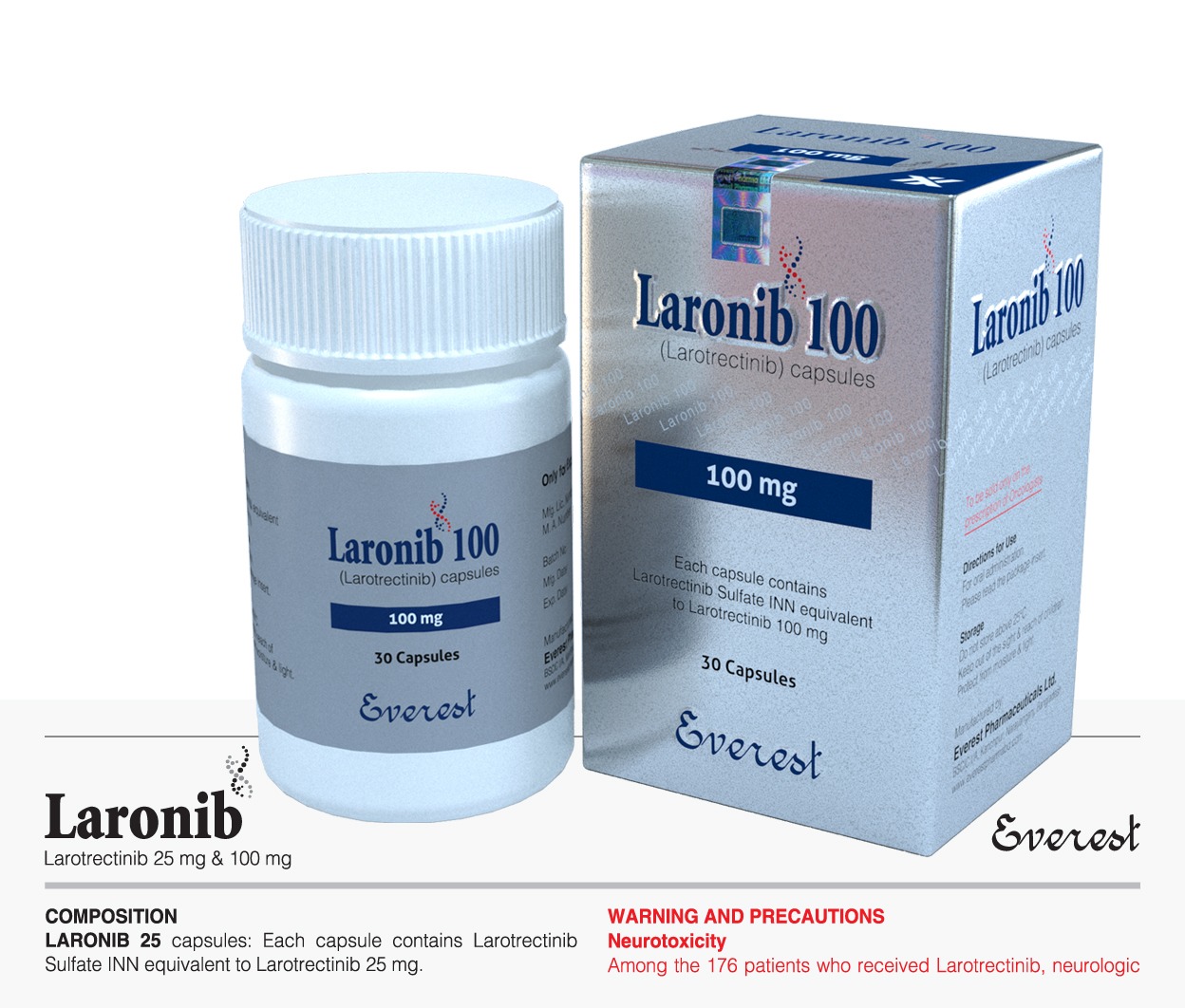
Laronib 100 (Larotrectinib): Complete Guide to Uses, Dosage, Benefits, Side Effects & FAQS
Laronib 100 is a breakthrough prescription medication containing the active ingredient Larotrectinib. It is professionally categorized under Prescription Medicines, Oncology & Cancer Medicines, Anticancer Medicines, and Biologics & Biosimilars. As a highly specialized TRK (Tropomyosin Receptor Kinase) inhibitor, Laronib 100 represents the future of precision medicine, focusing on the genetic makeup of the tumor rather than its location in the body.
Introduction to Laronib 100
Laronib 100 is a revolutionary oral anticancer therapy used to treat adult and pediatric patients whose tumors have a specific genetic feature known as an NTRK (Neurotrophic Receptor Tyrosine Kinase) gene fusion. Unlike traditional chemotherapy, Laronib 100 is “tumor-agnostic,” meaning it can be used to treat various types of cancer (such as lung, thyroid, or soft tissue sarcoma) as long as the Larotrectinib-sensitive genetic marker is present. By utilizing Larotrectinib, this medicine provides a targeted approach to stopping the growth of advanced or metastatic cancers.
Drug Class and Mechanism of Action
Laronib 100 belongs to a class of drugs known as kinase inhibitors. The active ingredient, Larotrectinib, is a highly selective inhibitor of tropomyosin receptor kinases (TRK). In some cancers, a mutation causes the NTRK gene to fuse with another gene, creating an abnormal TRK protein that stays “turned on.” This abnormal protein sends constant signals for cancer cells to grow and survive. Larotrectinib works by blocking these signals, effectively shutting down the primary driver of the tumor’s growth.
Medical Uses of Laronib 100
Laronib 100 is prescribed for a wide range of solid tumors under specific conditions:
-
NTRK Gene Fusion-Positive Cancers: Used for tumors that have been confirmed by a laboratory test to have an NTRK gene fusion.
-
Metastatic or Advanced Disease: Specifically for cancers that have spread or cannot be removed by surgery.
-
Refractory Cancer: Used when there are no satisfactory alternative treatments or when the cancer has progressed following other therapies.
-
Pediatric and Adult Care: Approved for both children and adults, making it a versatile option in specialized oncology.
Who Can Take Laronib 100?
A comprehensive genomic test is required before starting treatment with Laronib 100.
-
Eligibility: Patients must have a confirmed NTRK gene fusion without a known resistance mutation.
-
Monitoring Requirements: Patients must undergo regular blood tests to monitor liver enzymes (ALT and AST) and neurological function.
-
Who Should Avoid It: Individuals with a known hypersensitivity to Larotrectinib or any of its components.
-
Pregnancy Warning: Larotrectinib can cause fetal harm. Effective contraception must be used by women of childbearing age during treatment and for a week after the final dose.
Laronib 100 Dosage and Administration
For safety and maximum efficacy, follow these strict guidelines:
-
Standard Dosage: The typical dose for adults is one Laronib 100 mg capsule taken twice daily.
-
Pediatric Dosing: For children, the dose of Larotrectinib is often based on body surface area.
-
Administration: Swallow the capsule whole with water. It can be taken with or without food.
-
Consistency: Take the doses at the same time every morning and evening to maintain a steady level of Laronib 100 in your system.
-
Do Not Alter: Never crush or chew the capsules.
Benefits of Laronib 100
-
Precision Targeting: Specifically attacks the genetic driver of the cancer while sparing many healthy cells.
-
High Response Rates: Clinical studies have shown significant tumor shrinkage in a high percentage of patients with NTRK fusions.
-
Tumor-Agnostic Utility: Provides a treatment option for rare cancers that previously had no targeted therapy.
-
Oral Convenience: Allows patients to manage their cancer treatment at home with a daily pill rather than frequent IV infusions.
Side Effects of Laronib 100
Common side effects of Larotrectinib may include:
-
Tiredness or fatigue
-
Nausea and constipation
-
Dizziness or lightheadedness
-
Increased liver enzymes
Seek medical attention immediately if you notice:
-
Neurological Issues: Confusion, difficulty speaking, coordination problems, or tingling in the hands/feet.
-
Liver Problems: Yellowing of the eyes or skin, dark urine, or pain in the upper right stomach.
-
Severe Dizziness: Any feeling of faintness that interferes with daily activity.
Warnings and Precautions
-
Liver Health: Larotrectinib can cause liver toxicity; liver function tests are mandatory throughout treatment.
-
Neurological Risks: Because it targets proteins involved in nerve function, Laronib 100 can cause temporary nervous system changes.
-
Drug Interactions: Certain medications (like those for seizures or fungal infections) can change the level of Larotrectinib in your blood. Always inform your oncologist of all medications.
Laronib 100 Price, Availability & Generic Options
The price of Laronib 100 varies based on the country, the health facility, and insurance coverage. As a high-end targeted therapy, it is an investment in precision care. However, high-quality generic versions of Larotrectinib are available in certain markets, providing the same active ingredient and molecular efficacy at a more accessible cost.
Frequently Asked Questions (FAQs)
-
How do I know if Laronib 100 is right for me? You must have a specialized genomic test (Next-Generation Sequencing) to confirm the presence of an NTRK gene fusion.
-
Is Laronib 100 a chemotherapy? No. It is a “targeted therapy” (kinase inhibitor) that focuses on specific proteins, which is different from traditional chemotherapy.
-
What happens if I miss a dose? If you miss a dose of Laronib 100, do not take it if it is within 6 hours of your next dose. Skip the missed dose and resume your regular schedule.
-
Can children take this medication? Yes, Larotrectinib is approved for pediatric use when the appropriate genetic marker is present.
Conclusion
Laronib 100 (Larotrectinib) is a milestone in oncology, offering a powerful, targeted solution for patients with NTRK fusion-positive cancers. By focusing on the unique genetic signature of the tumor, it provides a highly effective means of controlling disease progression across many different types of cancer. For optimal results, treatment should be closely managed by an oncology specialist.
Medical Disclaimer: This content is for informational purposes only and does not replace professional medical advice, diagnosis, or treatment. Always consult a qualified healthcare provider before starting or changing any medication